Using Notebook Etsy Canva Mockup Templates to Streamline Your Product Listings
Selling notebooks on Etsy requires more than a great product. Shoppers decide quickly based on visuals, and a polished mockup can make the difference between a browse and a purchase. Creating those visuals from scratch, however, takes time, design skill, and software that many sellers do not have. That is where the Notebook Etsy Canva Mockup approach comes into play. It combines accessible design tools with pre-built templates to help sellers produce professional product images without a steep learning curve or expensive subscriptions.
This article explains what this type of mockup resource offers, how it performs in practice, and whether it fits your shop’s workflow and goals.
What a Notebook Etsy Canva Mockup Actually Is
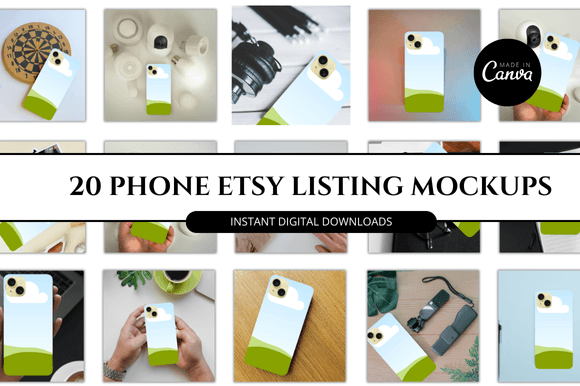
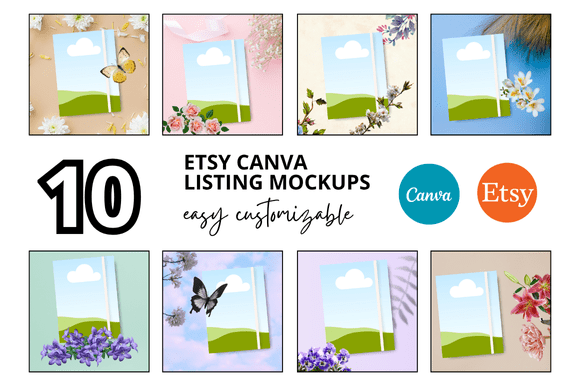
A Notebook Etsy Canva Mockup is a pre-designed template file created for use inside Canva, the popular browser-based design platform. The mockup typically includes layered elements such as a notebook cover, spine, interior pages, and sometimes props like pens, desks, or lighting effects. You simply drag your own artwork or branding into the designated area, and the template updates automatically to show your design on a realistic notebook.
These templates are commonly sold on Etsy itself or on creative marketplaces. Sellers download the file, open it in Canva (free or Pro), and replace placeholder graphics with their own. The result is a high-resolution image that looks like a product photograph, ready for listing photos, social media, or marketing materials.
What makes this setup worth discussing is its accessibility. Traditional mockup creation often requires Adobe Photoshop, knowledge of smart objects, and experience with layer management. A Canva-based mockup removes those barriers. If you can drag and drop an image and change text, you can produce a credible product visual in minutes.
Key Characteristics of These Templates
- Layered Canva file: The template is structured with clearly labeled layers for cover, back, spine, and interior. You edit only the layers you need.
- Pre-set dimensions: Most templates match Etsy’s recommended image sizes or standard social media formats, reducing the need for manual cropping.
- Realistic shadows and textures: Good mockups include drop shadows, paper grain, or lighting overlays that add depth without requiring extra work.
- Multiple angles: Many sets provide front, back, open, and angled views so you can create a cohesive listing gallery from one template pack.
- Brandable elements: You can change background colors, add logos, or adjust typography to match your brand identity.
Practical Value for Real Etsy Shops
The main strength of a Notebook Etsy Canva Mockup lies in how it simplifies the listing creation process. If you sell multiple notebook designs, you already know that photographing each one individually is time-consuming and inconsistent. Lighting changes, angles shift, and the final set of images rarely looks uniform. A mockup solves this by giving every design the same lighting, angle, and composition. Your shop gains a consistent visual identity that looks curated rather than pieced together.
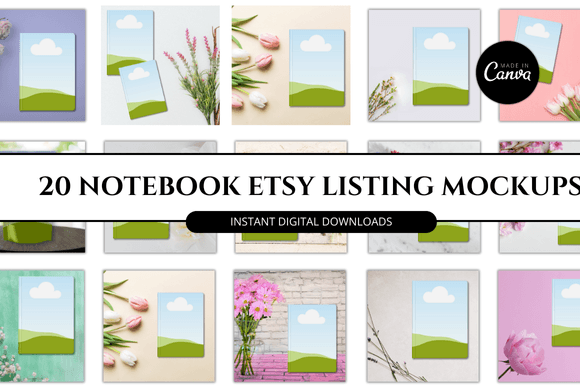
Consider a seller who offers twenty notebook covers with different patterns. Without a mockup, they would need to photograph each one, edit the photos, and hope the lighting matches across the set. With a Canva mockup, they open the template, swap the cover art twenty times, and export twenty images that look like they came from the same photoshoot. The time saved is substantial.
Another practical use is testing new designs before production. If you are a print-on-demand seller or a small publisher, you can create a mockup of a potential design, share it on social media or in a focus group, and gauge interest before committing to a print run. This reduces inventory risk and helps you invest in designs that already have traction.
Usability and Learning Curve
Canva’s interface is intuitive for most users, but mockup templates add a layer of complexity. The better templates include instructions or video links that walk you through the editing process. Expect to spend about fifteen to thirty minutes on your first mockup if you are new to Canva. After that, each subsequent design takes five to ten minutes, depending on how many angles you export.
One limitation is that not all templates are built equally. Some have messy layer names, missing elements, or low-resolution assets. When evaluating a Notebook Etsy Canva Mockup product, check the seller’s reviews for mentions of file organization and ease of use. A well-organized template saves frustration, especially when you are working on multiple designs in one session.
Who Benefits Most from This Approach
While almost any notebook seller can use a Canva mockup, certain groups gain more value from it.
- New Etsy sellers who have not yet built a photography setup. A mockup gives them professional-looking images without investing in lighting equipment or a camera.
- Print-on-demand sellers who need to produce images for many designs quickly. The template allows rapid iteration and consistent branding across a catalog.
- Small publishers and indie authors who sell branded notebooks alongside books. They can create cohesive product images that match their book covers, reinforcing brand recognition.
- Freelance designers and brand consultants who create mockups for clients. Using a Canva template reduces client revision cycles because changes are easy to make and preview.
- Educators and workshop leaders who sell course materials or planners. A uniform mockup style adds credibility to their digital product listings.
On the other hand, sellers with a very small number of designs may find the cost of a mockup template unnecessary if they can take simple flat-lay photos with good lighting. Similarly, those who need ultra-realistic, photorealistic renders may prefer a more advanced tool like Photoshop or a dedicated 3D mockup generator.
Flexibility and Customization Options
A well-designed Notebook Etsy Canva Mockup offers more than just a cover swap. You can often adjust the background color, add shadows, change the notebook’s paper color, or insert text overlays. Some templates include elements like loose pages, bookmarks, or decorative objects that you can toggle on and off. This flexibility allows you to create a unique look for each listing while maintaining a consistent base composition.
Customization also extends to branding. If you have a logo, brand colors, or specific fonts, you can apply them across all your mockups. This is particularly useful for sellers who want their shop to feel cohesive without hiring a designer.
One thing to watch for is file size and export quality. Canva free users export at a maximum resolution of 300 DPI for PNGs, which is generally sufficient for web listings. If you need print-ready files, you may need a Canva Pro subscription or a separate export tool. Check the template description for recommended export settings.
Quality, Consistency, and Long-Term Value
The quality of a Notebook Etsy Canva Mockup depends largely on the original template creator. High-quality templates use realistic textures, proper perspective, and subtle lighting. Lower-quality ones may look flat or have obvious digital artifacts. Reading reviews and looking at example images before purchasing is essential.
Consistency across your shop is one of the strongest arguments for using these templates. When a potential buyer scrolls through your listings, uniform mockup images create a sense of professionalism and trust. It signals that you care about presentation, which often translates to higher conversion rates.
In terms of long-term value, a single mockup template pack can be reused indefinitely. You pay once and use it for every new design you create. Over a year of active selling, the cost per use becomes negligible. Some sellers build a library of mockup angles and backgrounds, giving them flexibility for seasonal launches or special collections without recurring costs.
Possible Limitations to Consider
No tool is perfect, and the Canva mockup approach has drawbacks. First, the look is not custom to your physical product. If you sell notebooks with unique finishes like foil stamping, embossing, or rounded corners, a generic mockup may not represent those details accurately. Customers who receive a product that looks different from the listing may leave negative reviews.
Second, Canva’s performance can slow down with complex layered files, especially on older computers or slower internet connections. You may experience lag when moving elements or exporting large images.
Third, there is a slight risk of overuse. If many sellers in your niche use the same mockup template, your listings may look similar to competitors. Adding custom background colors, props, or unique typography can help differentiate your images.
Realistic Recommendations for Getting Started
If you decide to use a Notebook Etsy Canva Mockup, start by choosing a template that matches your product’s actual dimensions and binding style. A spiral notebook mockup will not work for a hardbound journal. Look for templates that offer multiple angles so you can build a complete listing gallery.
Before making a purchase, read the product description carefully. Confirm that the template is compatible with Canva and that you have the correct file format. Most are shared via Canva template links, which require a free Canva account. Some sellers also provide PDF guides or video walkthroughs, which are helpful for first-time users.
Once you have your template, create a consistent file naming system for your designs. This makes it easy to swap cover art without confusion. Export your images in at least 2048 pixels on the longest side for sharpness on Etsy. If you plan to use the images for print advertising, check whether the template supports higher resolution exports.
Integrating Mockups into Your Workflow
Treat the mockup process as part of your listing preparation routine. After finalizing a notebook design, open your template, replace the cover art, adjust the background if desired, and export. Save the final images in a folder organized by design name or date. This system prevents you from recreating work later.
Some sellers also batch their mockup work. They create five or ten notebook designs in one sitting, then open the template and swap each one consecutively. Batching reduces the time spent switching between tasks and keeps your focus on visual consistency.
Final Observations on Usefulness and Fit
The Notebook Etsy Canva Mockup is a practical tool for sellers who need efficient, consistent, and professional product images without investing in complex software or photography setups. It fits well into a workflow where speed and uniformity matter more than hyper-realism. If your notebooks have standard shapes and flat printed covers, a Canva mockup will serve you reliably.
For sellers whose products include specialty finishes or non-standard materials, the mockup may be best used as a starting point. You can combine it with real photographs of details like foil or texture to give customers an accurate impression. This hybrid approach uses the mockup for overall composition and supplements it with photos that highlight craftsmanship.
Ultimately, the decision depends on your audience and your goals. If you want to launch a new notebook line quickly, test multiple designs, or maintain a polished shop presence with limited resources, this approach offers a clear path forward. It is not a replacement for great product photography, but it is a reliable alternative that many sellers find more than adequate for their needs.