How 10 Notebook Etsy Mockup Listings Can Streamline Your Product Workflow
If you sell digital or physical notebooks on Etsy, product presentation can make or break a sale. A single notebook listing might require multiple lifestyle shots, flat lays, detail views, and size comparison images. Gathering all those assets from scratch for every new product is time-consuming and inconsistent. That is where a curated set of 10 Notebook Etsy Mockup Listings becomes more than a design shortcut—it becomes a repeatable system for producing polished, conversion-ready visuals.
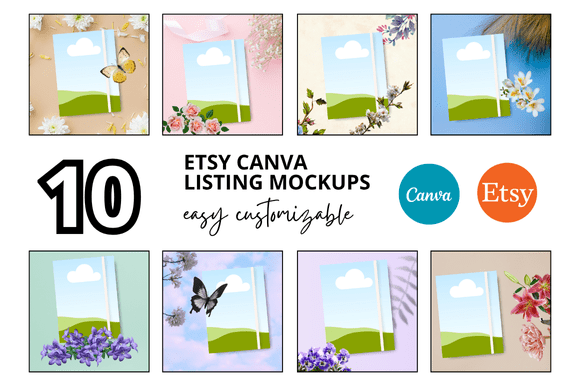
A mockup listing is a pre-built template file—often a Photoshop, Canva, or Placeit template—that lets you drop your notebook cover design into a realistic scene. By working with a collection of ten distinct mockups, you gain a modular toolkit that fits into your creation, launch, and maintenance workflows without requiring a full photoshoot each time.
Where Notebook Mockups Fit in a Broader Process
Whether you design bullet journals, planners, sketchbooks, or branded corporate notebooks, the journey from idea to customer involves several phases: concept development, cover design, formatting, listing creation, marketing, and fulfillment. Mockups sit squarely between the cover design and listing creation stages. They allow you to translate a flat 2D cover file into a three-dimensional product image that communicates size, binding, paper texture, and usage context.
For sellers who offer print-on-demand notebooks, mockups also bridge the gap between digital proof and physical sample. You can test multiple cover variations in realistic settings before committing to a print run, saving both time and material cost.
Before a Project: Planning Your Visual Assets
One of the most overlooked aspects of selling notebooks on Etsy is visual consistency across your shop. A customer browsing your listings should immediately recognize your brand through cohesive imagery. By selecting 10 Notebook Etsy Mockup Listings before you begin a new product line, you establish a controlled visual palette that you can reuse and adapt.
Consider mapping each mockup to a specific use case:
- Hero images: One or two mockups in bright, clean settings for the main listing photo.
- Detail shots: Mockups that show the notebook open, spine, or paper texture.
- Lifestyle shots: Scenes with desks, plants, coffee, or hands writing to evoke a mood.
- Size comparison: Mockups that place your notebook next to common objects like pens or phones.
- Variation previews: Mockups with multiple notebooks side by side to show color options.
Planning ahead prevents the scramble to find a suitable mockup at the last minute. It also ensures that all ten listings work together stylistically, so your shop feels intentional rather than patched together.
During Design and Production: A Smooth Integration
Once you have selected your ten mockup templates, the real efficiency gain appears during the design phase. Most quality mockups use smart object layers in Photoshop or Canva, meaning you open the template, double-click the smart object, paste your cover design, save, and the scene updates automatically.
This process eliminates repetitive work. Instead of manually placing your design into each scene, adjusting shadows, and matching perspectives, you rely on the mockup creator's lighting and perspective work. Your job becomes selecting the right template for each listing image and ensuring your cover art fits within the designated area.
Practical tip: Keep a master folder with your ten mockup files organized by scene type. Name them descriptively—something like “flat_lay_desk,” “open_notebook_hand,” “closed_spine_view.” When you finish a new cover design, run it through all ten mockups in one session. You will have a full set of product images ready in under an hour.
Quality Control and Consistency
A common pitfall among Etsy sellers is mixing mockup styles from different creators. One image might have warm, cozy lighting while another is cool and clinical. This inconsistency can confuse buyers and reduce trust. By committing to 10 Notebook Etsy Mockup Listings from a single designer or a curated set with compatible aesthetics, you maintain a uniform look across your shop.
During quality control, check each rendered image for:
- Accurate color representation: Does your cover design look the same across all mockups?
- Proper alignment: Are edges straight? Does the design wrap correctly around the spine or back cover?
- Resolution: Export at 300 DPI or the platform-recommended size for Etsy listings (typically around 2000–3000 pixels wide).
- Watermark placement: If you brand your images, ensure your logo or shop name does not obscure key details.
Run these checks once per mockup set, not per product. If the templates are sound, you only need to verify that your cover design renders correctly within them.
After Launch: Long-Term Use and Iteration
Your mockup collection does not become obsolete after your first launch. As you release seasonal editions, new cover colors, or updated interior layouts, you can reuse the same ten scenes. This repeatability helps build brand recognition. Regular customers will associate your visual style with quality, making them more likely to return.
Moreover, mockups allow for easy A/B testing. If a listing is underperforming, swap out one or two images using a different mockup from your set. Test a close-up scene versus a wider lifestyle shot. Because rendering is fast, you can experiment without a full reshoot.
For sellers who use Etsy Ads or social media campaigns, mockup images double as marketing collateral. A single flat lay mockup can become a Pinterest pin, Instagram post, or Facebook ad creative. The versatility of 10 Notebook Etsy Mockup Listings extends your investment well beyond the Etsy product page.
Integration with Other Tools and Platforms
Mockups do not operate in isolation. They interact with several parts of your workflow:
- Design software: Photoshop, Canva, Affinity Photo, or even free tools like GIMP. Ensure your chosen mockups support your preferred format. PSD files with smart objects are the most flexible, but layered PNG or Canva templates also work.
- Print-on-demand services: If you use Printful, Printify, or similar, compare your mockup renderings with the actual product photos provided by the service. Aligning visual expectations reduces customer returns.
- Listing optimization tools: eRank, Marmalead, or Alura can help you identify which images perform best, but consistent mockup quality ensures that image performance is about the design, not the photography variance.
- Digital planners and journals: If you sell digital notebooks for GoodNotes or Notability, mockups still apply. You can display the digital file on an iPad or tablet mockup to show how it looks in use.
Understanding these touchpoints helps you select mockups that are compatible with your entire tech stack, not just your design app.
Practical Implementation Tips
To get the most from your 10 Notebook Etsy Mockup Listings, consider these workflow recommendations:
- Batch your mockup work. Set aside one day per month to render all new covers through your template set. This prevents context switching and keeps your image library current.
- Create an image spec sheet. Document which mockup produces which type of image (hero, detail, lifestyle), the export size, and any color profile settings. This makes onboarding a virtual assistant or collaborator much easier.
- Maintain a backup folder. Store your original mockup files and all rendered images in a cloud service like Google Drive or Dropbox. If your computer fails, you do not lose your product visuals.
- Rotate mockups seasonally. Some mockup scenes look dated after a year. Swap out underperforming templates for fresh ones from your collection or new purchases. The rotation keeps your shop feeling current without a full redesign.
Choosing the Right Set for Your Workflow
Not all mockup collections are created equal. When evaluating 10 Notebook Etsy Mockup Listings, look for these quality indicators:
- High resolution: Minimum 3000 pixels on the longest side to avoid pixelation on retina displays.
- Organized layers: Clearly named groups and smart objects make editing straightforward.
- Realistic lighting and shadows: Overly synthetic scenes can make your product look cheap.
- Diverse angles: A good set covers front cover, open notebook, side view, and context shots.
- Editable backgrounds: The ability to change background color or texture gives you creative freedom.
If you are new to mockups, start with a mid-priced bundle from a reputable Etsy seller. Read reviews that mention ease of use and compatibility with your design software. Once you have a functioning set, you can expand your collection with single mockups that fill specific gaps—for example, a mockup showing a notebook in a handbag or on a wooden table.
Long-Term Value and Scalability
A well-chosen set of ten mockups can serve a shop for hundreds of listings. As your product line grows from three notebook designs to thirty, the mockups scale with you. The initial time investment—selecting, purchasing, and organizing the templates—pays off each time you use them.
For sellers who expand into related products like stickers, planners, or stationery sets, many notebook mockups also work with slight modifications. A flat lay scene intended for a notebook can often display a sticker sheet or a pen with minimal adjustment. This cross-utility makes the collection even more valuable.
Additionally, mockups reduce dependency on physical samples. If you sell internationally, shipping samples for photography is expensive and slow. Digital mockups let you launch products in parallel across multiple markets without waiting for a prototype to arrive.
The goal is not to replace real product photography entirely—especially for premium or handmade notebooks where texture and craftsmanship matter. But for most Etsy sellers, a curated mockup set provides 80% of the visual quality with 20% of the effort. That efficiency frees you to focus on design, customer service, and scaling your business.
By treating 10 Notebook Etsy Mockup Listings as a permanent part of your content pipeline, you build a repeatable, reliable system that supports every new product launch. The result is a shop that looks professional, cohesive, and trustworthy—without requiring a photo studio or a massive time commitment.