Making Sense of the Marketing Strategy Workbook in Your Planning Process
When you sit down to shape a marketing plan, the tools you choose can make the difference between a clear, actionable roadmap and a pile of scattered notes. Among the many resources available, the marketing strategy workbook has become a popular option for individuals and teams who want structure without rigidity. But how does a workbook compare to other planning methods? When does it genuinely help, and when might you be better off with a different approach? Let’s walk through the nuances so you can decide what fits your situation.
Understanding the Marketing Strategy Workbook Approach
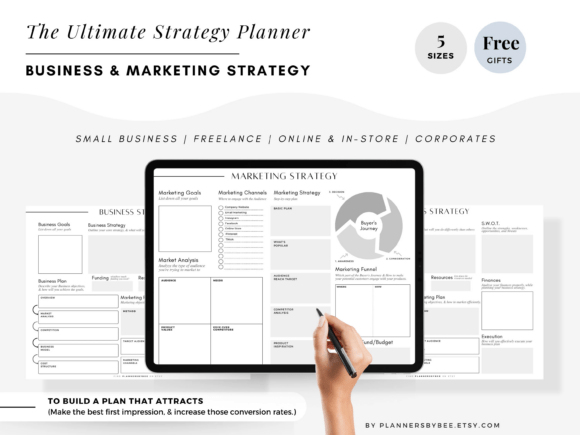
A marketing strategy workbook is essentially a guided document—often a printable PDF or digital template—that walks you through the steps of building a marketing plan. It typically includes prompts, frameworks, and space for your own insights. Unlike a one-page marketing plan or a full consultant-led strategy session, the workbook sits somewhere in between: it provides a structure but relies on your own research and thinking to fill in the blanks.
What makes a workbook distinct is its emphasis on process. Instead of giving you a finished strategy, it asks you to work through questions about your audience, value proposition, channels, and metrics. This hands-on format can help you internalize the reasoning behind your choices. For many professionals, that reflective aspect is far more valuable than a pre-written template that simply asks for a budget number.
That said, workbooks vary widely. Some are detailed and academic, requiring hours of analysis. Others are more lightweight, designed for a quick annual review. The quality of the workbook matters, but the key distinction lies in how it functions as a tool versus a one-time read.
How a Workbook Compares with Other Marketing Planning Resources
To evaluate the marketing strategy workbook, it helps to place it alongside common alternatives—not to pick a winner, but to see which tool fits which job.
Versus Pre-Written Marketing Plans or Guides
Pre-written guides often explain strategy concepts but don’t ask you to apply them. They can be informative, but they rarely lead to an actual plan. A workbook, by contrast, forces you to commit ideas to paper. If you learn best by doing, the workbook tends to produce more tangible results. If you simply need to understand theory, a guide may be enough.
For example, a startup founder with limited time might prefer a workbook that helps them draft a positioning statement in one session. A marketing student, on the other hand, might get more from a textbook chapter on strategy frameworks without the workbook format.
Versus Consulting or Facilitated Sessions
Hiring a consultant offers personalized guidance and the ability to challenge assumptions in real time. A workbook cannot replicate that dynamic. However, a workbook costs a fraction of the price and can be used repeatedly. If you have a capable internal team that just needs a structured process, a workbook may be the smarter investment. If you’re stuck on core strategic questions (e.g., which market to enter), a consultant’s expertise might be necessary.
Consider a mid-size B2B company launching a new product line: a workbook could help the marketing team align around messaging and channels, but if the product’s target market is unclear, outside facilitation might yield better insights.
Versus Digital Strategy Tools or Software
There are many digital tools—from mind-mapping apps to full marketing platforms—that help you build strategy. These often offer collaboration features, data integration, and templates. A marketing strategy workbook is typically static, which can be a limitation for teams that need real-time updates or version control. Yet static can be an advantage: no software learning curve, no subscription, no distraction from notifications. For a solo practitioner or a small team, a workbook might be all you need. For a larger organization needing alignment across departments, a shared digital workspace might be more practical.
Key Strengths and Tradeoffs of Using a Marketing Strategy Workbook
Every tool has a profile of strengths and limitations. Understanding those helps you avoid mismatched expectations.
Strengths
- Forces clarity: By requiring written answers, you can’t gloss over gaps in your thinking. The workbook acts as a mirror.
- Repeatable: Use it quarterly or annually to refresh your strategy without starting from scratch.
- Low commitment: No need to buy software or schedule meetings—just print or open a file.
- Customizable: You can skip sections that don’t apply or add your own pages.
Tradeoffs
- No external feedback: You’re reviewing your own work. Confirmation bias can creep in.
- Requires self-discipline: Without a deadline or facilitator, many workbooks remain unfinished.
- Static format: If your market shifts quickly, a printed workbook may become outdated before you finish.
- One-size-fits-all structure: Some workbooks are designed for specific industries or company sizes, and using a generic one can feel forced.
These tradeoffs don’t make a workbook bad—they just mean you should consider your context. If you’re someone who benefits from accountability, pairing a workbook with a peer check-in can address the isolation problem.
When a Marketing Strategy Workbook Is the Right Choice
Certain situations align particularly well with the workbook format.
- You are a solo marketer or small business owner: You need to organize your thoughts but can’t afford a consultant. A workbook gives you a backbone.
- Your team is aligned on the basics: If you already understand your market and your goals, a workbook helps you formalize them efficiently.
- You want to build internal capability: Going through the workbook process as a team teaches everyone how to think strategically, not just what to do.
- You are exploring alternatives: Maybe you’re not ready to commit to a full strategy overhaul. A lightweight workbook can help you test ideas without overhead.
For example, a freelance digital marketer who works with multiple clients might use a workbook to draft a strategy for each client. The structured prompts ensure nothing is missed, and the format is easy to share.
When You Might Need a Different Approach
There are also clear times when a workbook falls short.
- Your organization is complex: If you have multiple product lines, global markets, or many stakeholders, a workbook’s linear structure may oversimplify the reality. You may need facilitated workshops or a customized strategy framework.
- You are in a crisis: When you need a rapid pivot, filling out a workbook can feel like a distraction. In such cases, a shorter action plan or a decision tree might be more appropriate.
- You need data-driven validation: A workbook relies on your assumptions. If your strategy hinges on unknown market data, you need research tools or analytics first, not a planning document.
- You dislike writing or prefer visual thinking: Some people thrive with whiteboards and sticky notes. A text-heavy workbook can be demotivating. Consider a visual strategy canvas instead.
Let’s say a growing e-commerce brand is entering three new countries simultaneously. A single workbook might not capture the complexity of different customer behaviors, regulatory environments, and local competitors. A more iterative, collaborative approach would serve them better.
Practical Tips for Getting the Most Out of a Marketing Strategy Workbook
If you decide a marketing strategy workbook is right for you, a few practices can improve the experience.
- Treat it as a living document: Don’t lock it away after you fill it in. Revisit and revise as you learn from campaigns.
- Involve a colleague for review: Even if you work alone, ask a trusted peer to read your draft and challenge your assumptions.
- Focus on a few core sections first: You don’t have to complete every prompt. Start with target audience and value proposition—the parts that drive everything else.
- Pair it with a calendar: A strategy is only useful if it gets executed. After finishing the workbook, create a timeline and assign ownership.
- Try before you commit: Many workbooks offer sample pages or free versions. Test a few to see which format resonates with your thinking style.
For instance, a non-profit organization running a fundraising campaign used a workbook to map out donor segments and messaging, then shared it with their board for feedback. The workbook gave them a tangible artifact to discuss, rather than just a verbal plan.
Making an Informed Decision
No single tool fits every scenario. The marketing strategy workbook is a powerful option when you need structure, want to internalize strategic thinking, and have the discipline to complete it. It is less effective when you need external validation, face high complexity, or require real-time adaptability.
Your choice ultimately depends on your specific goals, team dynamics, and the stage of your marketing maturity. If you’re comparing options, ask yourself: Do I need a process that teaches me to think strategically, or do I need outputs quickly? Am I working alone or with a group? How much uncertainty do I have about my market?
A workbook can be a solid starting point, a periodic review tool, or a complement to other resources. By understanding its strengths and tradeoffs, you can use it where it adds value—and turn to other methods where it doesn’t. That balanced view is what turns a planning tool into a genuine asset.