Calendar Frame Mockup Canva: A Practical Evaluation for Designers and Content Creators
When you need to present a calendar design—whether for a print-on-demand product, a digital planner, or a client proposal—the way you showcase that design can influence how it is perceived. A raw calendar layout rarely communicates its full potential. That is where a presentation tool like a Calendar Frame Mockup Canva comes into focus. But is it the right tool for your specific workflow? This article evaluates what a Calendar Frame Mockup Canva actually offers, where it excels, where it falls short, and how to decide whether it aligns with your project goals.
What a Calendar Frame Mockup Canva Actually Is
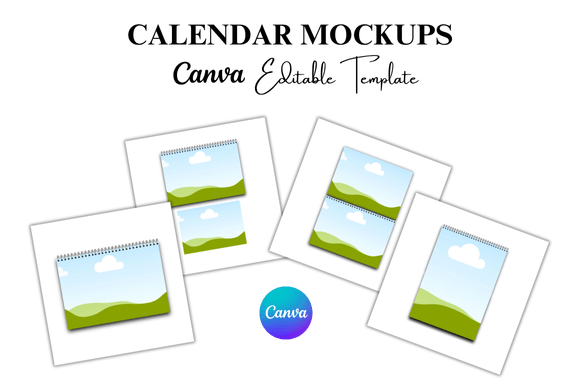
At its core, a Calendar Frame Mockup Canva is a pre-designed template within Canva that allows you to place your calendar artwork inside a realistic or stylized frame, prop, or setting. These mockups simulate how a finished calendar might look in a physical environment—hanging on a wall, sitting on a desk, held in hands, or displayed within a photo frame. You insert your own calendar design into a designated area (often via a smart layer or drag-and-drop placeholder), and the mockup automatically applies the lighting, shadows, perspective, and texture to make the composite image appear natural.
Canva’s platform makes these mockups accessible without requiring Adobe Photoshop expertise or advanced rendering skills. Many iterations are available through Canva’s own Elements library, and third-party creators also offer Canva-compatible mockup templates. Importantly, a Calendar Frame Mockup Canva is not a stand-alone software tool; it is a template type within the broader Canva ecosystem. That distinction matters because your experience depends heavily on both the quality of the specific mockup you choose and your familiarity with Canva’s interface.
Why Designers and Sellers Seek Out This Approach
Several practical motivations drive people toward a Calendar Frame Mockup Canva. For print-on-demand sellers, a polished mockup can reduce the cost of physical product photography. For digital product creators, it adds professionalism to Etsy listings or social media previews. For freelance designers, it speeds up client presentations by offering a visually complete preview without staging a real photoshoot.
Another common scenario involves time constraints. If you need to produce multiple calendar variations for different seasons, holidays, or niches, the ability to swap designs within a consistent mockup saves hours. Canva’s browser-based nature also appeals to teams who need to collaborate remotely without sending heavy design files back and forth.
There is also a learning-curve consideration. Many people evaluating a Calendar Frame Mockup Canva are not professional graphic designers. They may be small business owners, bloggers, or content creators who want a reliable result without mastering complex software. The low barrier to entry is often a primary reason for initial interest.
Benefits Worth Considering
- Speed and iteration. Once you have a Calendar Frame Mockup Canva set up, updating the calendar artwork takes seconds. This is especially valuable if you are testing multiple designs or offering personalized calendars.
- Consistency across a product line. Using the same mockup for a series of calendars creates a unified brand aesthetic. Customers see a recognizable style across your listings or portfolio.
- No physical inventory required. You can show a realistic product visualization before printing a single unit. This reduces upfront risk, especially for new product launches.
- Canva’s built-in editing features. You can adjust colors, add text overlays, resize elements, or combine multiple mockups in one design without leaving the platform. The mockup becomes part of a larger composition.
- Cost efficiency. Many Calendar Frame Mockup Canva templates are available at low cost or within Canva Pro subscriptions. Compared to hiring a photographer or purchasing high-end mockup generators, this is a budget-friendly option.
Tradeoffs and Limitations to Keep in Mind
While the convenience is genuine, there are tradeoffs. One significant limitation is resolution. Some Calendar Frame Mockup Canva templates, especially those from third-party sources with low-quality exports, may not hold up at scale. If you plan to use the mockup for large-format advertising or high-resolution print catalogs, you should test the output resolution before committing.
Another tradeoff involves realism. Not all mockups are created equal. A poorly executed Calendar Frame Mockup Canva can look artificial—flat shadows, mismatched lighting, or distorted perspective can undermine the very professionalism you are trying to project. The onus is on you to vet the quality of the specific mockup template, which requires time and sometimes trial and error.
Customization range can also be narrower than in dedicated mockup software. If you need to adjust the frame material, change the background environment, or tweak the angle of the shot, your ability to do so depends on the mockup’s design. Many Canva mockups are static images with a smart layer overlay; they are not fully adjustable 3D scenes. That means you are working within the creator’s original staging decisions.
Additionally, Canva’s template licensing varies. Some mockups are free for commercial use; others require attribution or restrict use in certain contexts. You need to verify the license terms for each Calendar Frame Mockup Canva you use, particularly if you plan to sell the resulting images or use them in client work.
When a Calendar Frame Mockup Canva Is a Strong Fit
For many use cases, this approach is entirely appropriate. It works well if you are:
- Selling digital calendars or planners on platforms like Etsy, Gumroad, or Teachers Pay Teachers. Buyers want to see a realistic preview, but you do not need print-grade resolution for a digital thumbnail.
- Creating social media content to promote a calendar launch. Instagram, Pinterest, and Facebook compress images anyway, so moderate resolution is sufficient.
- Building a portfolio or client proposal. Speed matters more than absolute pixel perfection, and you need to present multiple options quickly.
- Testing a new product category. You want to gauge interest before investing in physical samples or professional photography.
- Working within a tight budget. Canva Pro is relatively inexpensive, and many mockups are available at no additional cost.
In these scenarios, the efficiency and accessibility of a Calendar Frame Mockup Canva outweigh the limitations. The key is matching your output requirements to the mockup’s capabilities.
When Alternatives Might Serve You Better
There are situations where a Calendar Frame Mockup Canva is not the optimal choice. Consider alternatives if:
- You require ultra-high-resolution images for print catalogs, billboards, or large-format displays. Dedicating mockup software such as Adobe Photoshop with high-res PSD mockups, or using a 3D rendering tool, gives you more control over the final output.
- You need full customization of the environment. If your brand demands a specific background, lighting setup, or frame material that no existing Canva mockup matches, building a custom mockup from scratch may be more efficient than trying to adapt a template.
- You produce hundreds of unique calendar designs per month. Automating mockup generation with tools like Placeit, Smartmockups, or dedicated mockup generators can save more time than manually swapping layers in Canva.
- You are a professional photographer or product designer. For clients expecting a specific level of visual fidelity, staging a real photoshoot or using professional-grade mockup services may be necessary to meet expectations.
- You need strict control over licensing. Some commercial mockup libraries offer clearer usage rights than random Canva templates. If your business has legal requirements around image usage, verify the mockup’s license carefully.
Practical Decision-Making Insights
Evaluating a Calendar Frame Mockup Canva requires aligning the tool’s characteristics with your actual needs. Start by defining the deliverable. Are you creating a digital preview or a print-ready asset? Digital previews are more forgiving of resolution and rendering subtlety. Print-ready assets demand higher fidelity.
Next, consider your volume. If you produce a handful of calendar designs per year, the time saved by using a ready-made mockup is significant. If you produce dozens or hundreds, look for mockups that support batch processing or templates that are easy to duplicate and modify at scale.
License transparency matters more than people often realize. Before you invest time designing around a specific Calendar Frame Mockup Canva, confirm that the usage terms cover your intended use case. Keep a record of the license for each mockup you use, especially if your business scales.
Test before committing. Download a free or low-cost Calendar Frame Mockup Canva and run it through your workflow. Assess how it looks at the size you will actually use. Check the shadows, the edge blending, and whether the frame style complements your calendar design. A mockup that looks good in the Canva editor may look different when exported or scaled.
Finally, consider redundancy. If a particular Calendar Frame Mockup Canva is removed from the platform or the creator changes the license, you do not want to lose access to your product imagery. Keep original exports saved locally and maintain backups of your mockup files.
Putting It All Together
A Calendar Frame Mockup Canva is a practical solution for many designers, sellers, and content creators who need to present calendar designs efficiently and affordably. It is not a universal fit for every scenario, but understanding its strengths and boundaries helps you deploy it where it works best. When your priority is speed, consistency, and ease of use—and your output medium aligns with the mockup’s quality—this approach offers a reliable path from design to presentation. When your requirements demand higher resolution, deeper customization, or automated volume, exploring complementary tools becomes the wiser choice. The decision ultimately rests on being clear about what you need the mockup to accomplish and whether the available templates can deliver that result within your constraints.