Beyond the Deck: How the 20 Tarot Cards Etsy Listings Mockup Elevates the Modern Seller’s Craft
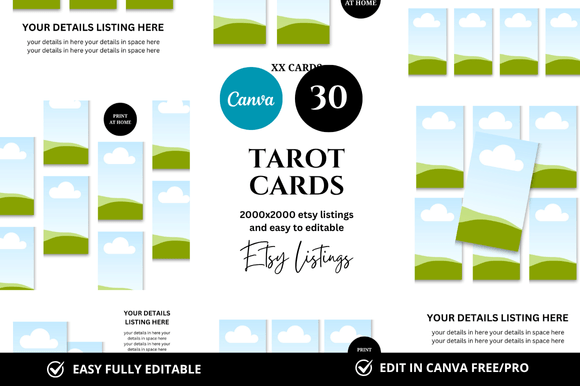
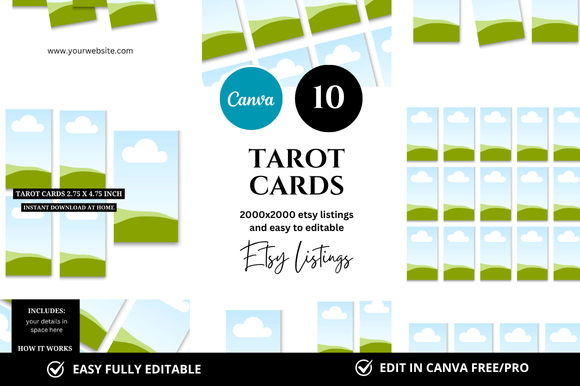
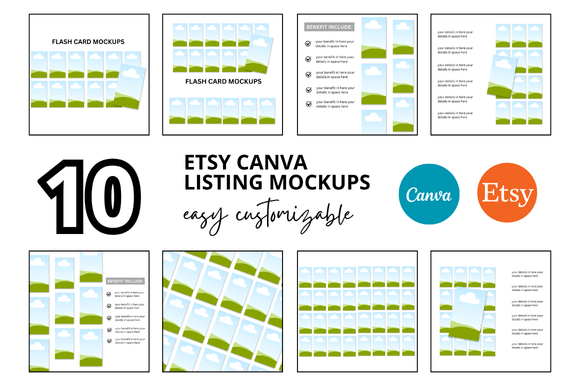
Tarot has always lived at the intersection of the archetypal and the personal. Each card carries a story, a symbol, and a invitation to reflect. In the digital marketplace, that same invitation must now be extended through a screen — and that changes everything. For creators, designers, and small business owners on Etsy, the bridge between a digital asset and a tangible, desirable product is often nothing more than an image. But not just any image. The right presentation can transform a PNG file into something a buyer can almost feel. This is where the 20 Tarot Cards Etsy Listings Mockup enters as a quiet but powerful ally.
Mockups, in the broadest sense, are visual placeholders. They show a product in context. But a well-crafted set of tarot card mockups does something deeper: it signals legitimacy, triggers imagination, and communicates the texture of the experience a buyer will receive. When a seller uses a curated collection of mockups — especially one that offers variety in angles, settings, and lighting — they are not just displaying a product. They are staging a feeling. And on Etsy, where thousands of tarot decks compete for attention, that feeling is often the deciding factor.
The Quiet Labor of First Impressions
Etsy’s search algorithm rewards listings with high-quality images. That much is common knowledge. But what is less discussed is how the 20 Tarot Cards Etsy Listings Mockup addresses a specific pain point for creators: the sheer time it takes to photograph a deck in multiple settings. Not every seller has access to a studio, a set of props, or consistent natural light. Mockups solve this by providing ready-made environments that look professional without the overhead of a photoshoot.
Consider the difference between a single flat image of a card and a scene where the same card rests on a velvet cloth beside a crystal, with soft afternoon light falling across its edge. The mockup does not just show the card; it narrates a mood. For a buyer browsing tarot decks, that mood is part of the purchase. They are not just buying cardstock. They are buying the possibility of a ritual, a quiet moment of insight, or a conversation starter for their own practice.
What 20 Mockups Actually Cover
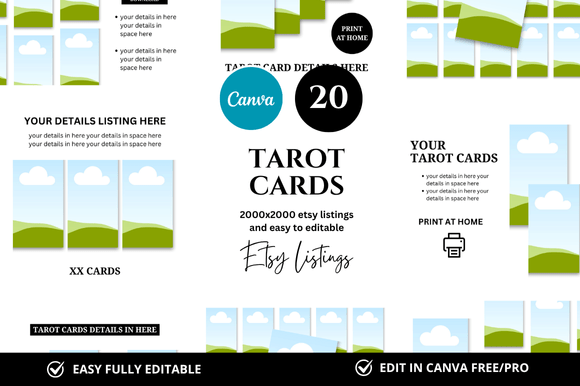
A collection of this size is not arbitrary. Twenty mockups allow a seller to show a single deck in enough variety to cover every major listing slot on Etsy — the cover image, the lifestyle shot, the detail close-up, the scale shot, and the use-case demonstration. With twenty views, a seller can rotate between flat lays, hand-held poses, tabletop scenes, and even gif-ready angled displays without repeating a single composition. This variety does more than fill space. It answers unspoken buyer questions: How big is this card? How does it look in real light? Can I see the back design? Does it feel modern or vintage?
Using the 20 Tarot Cards Etsy Listings Mockup effectively means assigning each mockup a purpose. One might be reserved for the listing thumbnail — the image that must stop a scroll. Another might focus on the card back, which for many collectors is a subtle but important detail. A third could show the card next to a journal or a candle, suggesting a broader practice rather than just a product. When each mockup has a job, the listing becomes a visual story rather than a catalog entry.
Practical Workflow for Digital Sellers
For creators who design their own tarot decks, the workflow often involves hours of illustration, layout, and print testing. By the time the deck is ready for sale, the energy for staging a photoshoot may be depleted. Mockups offer a second wind. They reduce the friction between finishing a design and posting a listing. A seller can simply drag a card design into a smart layer within a mockup template and export a polished image in minutes.
But there is a nuance. Not all mockups handle card dimensions or curvature the same way. A quality 20 Tarot Cards Etsy Listings Mockup set will include smart objects that respect the aspect ratio of standard tarot cards — roughly 2.75 by 4.75 inches — and allow for slight perspective distortion that mimics a real camera lens. The best mockups also consider the back of the card, the edge thickness, and the way light reflects off gloss or matte finishes. These details might seem minor, but they are precisely what separates a convincing mockup from one that looks like a cut-out pasted onto a background.
Real-World Relevance for Different Sellers
- Independent artists who sell printed decks can use mockups to test visual themes before committing to a print run. Seeing the card in a mockup often reveals design issues — such as low contrast or awkward margins — that are invisible on a digital canvas.
- Print-on-demand sellers benefit from mockups because they cannot photograph a physical deck that has not yet been produced. The mockup becomes the primary visual evidence of the product.
- Etsy shop owners who resell vintage or indie decks can use mockups to create a consistent brand aesthetic across their shop, even when the decks themselves vary in style and condition.
- Course creators and educators who teach tarot design often use mockup sets to show students how a finished deck will appear in a real-world context, bridging the gap between concept and product.
Each of these use cases shares a common need: to present a tarot deck as a finished, desirable object. The mockup does not replace the product. It elevates the perception of the product before it reaches a hand.
The Visual Language of Trust
On Etsy, trust is built visually. A buyer cannot hold the deck, riffle the cards, or smell the ink. They rely entirely on images. When those images are inconsistent, poorly lit, or obviously generic, trust erodes. A seller who uses a comprehensive mockup set — especially one that includes lifestyle imagery alongside isolated product shots — signals that they care about the details. That care transfers to the product itself.
There is also a psychological layer. Tarot decks are personal objects. Buyers often choose a deck because it feels aligned with their own aesthetic or spiritual sensibility. A mockup that places the cards in a natural, uncluttered setting — perhaps on a wooden table with a sprig of rosemary or next to a half-read book — invites the buyer to imagine that deck in their own life. The 20 Tarot Cards Etsy Listings Mockup becomes a mirror for that imagination. It does not sell a card. It sells a moment.
Variation as Strategy
Using the same mockup across multiple listings is a common mistake. Etsy’s algorithm, and buyers themselves, respond to variety. A listing with five different images performs better than one with three nearly identical shots. Twenty mockups give a seller enough diversity to create unique visual identities for different decks without needing to design new scenes from scratch. A dark, moody set of mockups might suit a shadow-work deck, while a bright, airy set fits an oracle deck focused on daily affirmations. The same base collection can produce completely different brand tones depending on which mockups a seller chooses.
Considerations When Choosing a Mockup Set
Not all mockup collections are created equal. A seller evaluating a 20 Tarot Cards Etsy Listings Mockup should look for several qualities beyond the number of scenes. Resolution matters. Etsy compresses images, but starting with a high-resolution file ensures that details remain sharp after compression. File format also matters. PSD files with smart layers are standard, but some sellers prefer PNG overlays that can be used in Canva or other browser-based tools. The background should be neutral enough to allow the card to stand out, but textured enough to feel real.
Another factor is licensing. Most mockup sets for Etsy sellers come with commercial use rights, but it is worth verifying that the mockup can be used in listing images, social media promotions, and advertising without attribution. The last thing a seller wants is to build a brand around a mockup and later discover usage restrictions.
Beyond the Listing: Extended Uses of Mockups
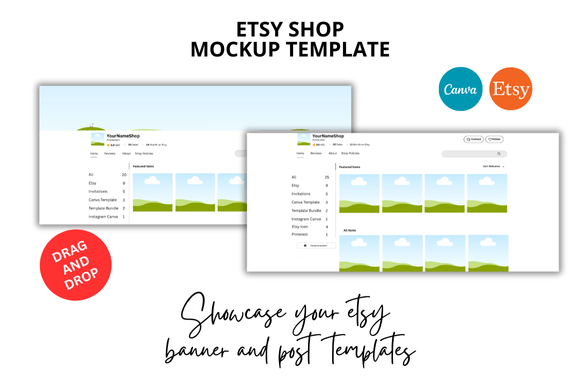
The value of a good mockup set extends beyond Etsy listings. Social media content — particularly Instagram and Pinterest — thrives on visual consistency. A seller can repurpose mockup images for promotional posts, behind-the-scenes content, or even as part of a digital lookbook. The same mockup that serves as a listing photo can also appear in a YouTube thumbnail, a newsletter header, or an Etsy shop banner. The initial investment in a quality set pays dividends across multiple channels.
For educators and content creators, mockups also serve as presentation tools. A blog post about tarot design principles becomes more engaging when illustrated with realistic mockups rather than raw digital files. A course module on product photography can use mockups as examples of composition and lighting. The 20 Tarot Cards Etsy Listings Mockup is not just a tool for selling — it is a tool for teaching, storytelling, and building a visual brand.
Adapting to Trends Without Redesigning Everything
Visual trends on Etsy shift. One season might favor dark academia aesthetics with warm, dim lighting and leather textures. The next might lean toward minimalist Scandinavian interiors with clean lines and pale wood. A mockup set with twenty variations is more likely to include scenes that fit current trends, and a seller can adapt simply by choosing different images from the same library. There is no need to reshoot or re-edit. The flexibility allows sellers to stay relevant without constant production overhead.
This is especially valuable for sellers who run multiple shops or manage a large inventory of decks. The same mockup set can serve a dozen different products, each with its own visual identity, simply by varying the card design and the chosen scene. The efficiency is not just about time — it is about creative bandwidth. A seller who spends less time on photography can spend more time on design, research, or customer engagement.
The Unseen Role of Mockups in Product Development
Mockups are often discussed as a marketing tool, but they also play a role in product development. Before a deck goes to print, a designer can place the card into a mockup to evaluate how the design reads in a physical context. Colors that look vibrant on a monitor may appear dull when surrounded by a natural background. Typography that seems legible on a white screen may become hard to read when placed at an angle. The mockup reveals these issues early, saving the cost of a test print and the disappointment of a design that does not translate well.
In this sense, the 20 Tarot Cards Etsy Listings Mockup functions as a prototype tool. It allows a creator to iterate visually before committing to production. For small-scale creators who operate on tight margins, catching a design flaw early can be the difference between a profitable launch and a costly mistake.
Why Twenty Matters
The number twenty is not arbitrary. A single mockup gives a buyer one perspective. Five mockups offer a sense of the product. Twenty mockups provide a comprehensive visual experience that covers almost every question a buyer might have. Scale, texture, context, lighting variation, and even the way a card sits in a hand — all of these can be addressed across twenty distinct scenes. The redundancy of choice also works in the seller’s favor. If one mockup does not perform well in A/B testing, there are nineteen others to try. The set becomes a toolkit rather than a single-use asset.
For the buyer, seeing a deck presented in twenty different ways removes uncertainty. It builds confidence. And on a platform where hesitation often leads to a closed tab, confidence is the currency of conversion.
The Quiet Expertise of Thoughtful Presentation
There is a quiet expertise in knowing that a product is not just the thing itself, but the story around it. The 20 Tarot Cards Etsy Listings Mockup is a tool for telling that story without words. It respects the buyer’s intelligence by showing, not telling. It respects the seller’s time by offering efficiency without sacrificing quality. And it respects the deck itself — a collection of images and meanings that has carried human curiosity for centuries — by presenting it in a way that feels worthy of the attention it asks for.
In a marketplace crowded with decks, the difference between a listing that sells and one that lingers is often invisible until it is seen. A good mockup does not shout. It simply makes the card look like something worth holding.