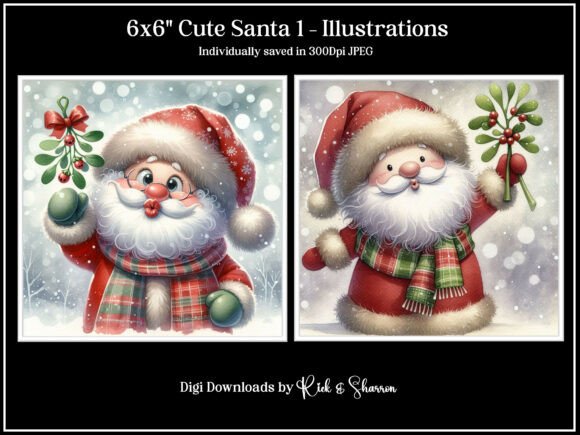
6x6 Cute Santa 1 – 1-4 JPEG: Practical Applications for Holiday Design Workflows
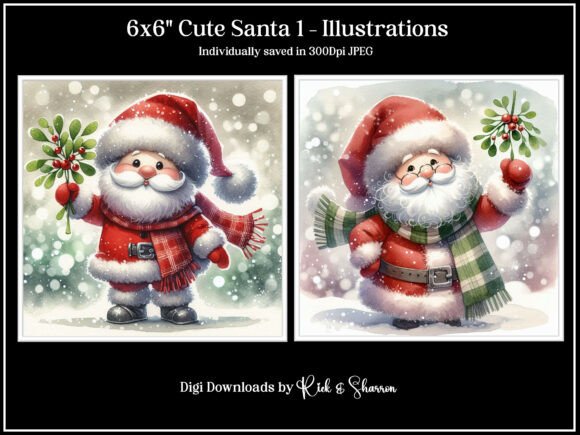
Digital assets that are easy to work with and ready to deploy save time and reduce friction in any creative process. The 6x6 Cute Santa 1 – 1-4 JPEG is one such asset—a single image from a four-part series featuring a charming Santa illustration sized at a square 6x6 inches (or 6x6 units at a given resolution). Whether you are a small business owner preparing seasonal promotions, a freelancer assembling holiday content for clients, or a hobbyist creating personal projects, understanding how to integrate this JPEG into your workflow can improve consistency and speed up production.
This article breaks down what this asset is, where it fits in common project stages, and how to handle it alongside other tools and resources. You will find practical tips on preparation, compatibility, organization, and long-term reuse, all aimed at helping you make the most of a single themed image without unnecessary complexity.
What Is the 6x6 Cute Santa 1 – 1-4 JPEG?
At a basic level, this is a JPEG image file with a square aspect ratio—6 inches by 6 inches at a typical print resolution of 300 DPI (giving you 1800 x 1800 pixels). The “Cute Santa” designation tells you the subject: a stylized, friendly Santa Claus appropriate for holiday-themed projects. The “1 – 1-4” indicates this is the first of four coordinated images in a set, meaning the asset is part of a series that likely shares a consistent art style, color palette, and character design.
Because it is a JPEG, it is universally viewable and importable into nearly every design, document, or publishing application. No special software or plug-ins are needed. The file is compressed but typically retains enough quality for both screen display and moderate print runs. Knowing these characteristics up front lets you plan how to use the asset without worrying about format limitations.
Where This Image Fits in a Broader Process
Any holiday project involves multiple stages: ideation, asset gathering, layout, production, and distribution. The 6x6 Cute Santa 1 – 1-4 JPEG belongs in the asset gathering and layout phases, but its value extends into later stages if you prepare it correctly early on.
- Before a project: When planning a holiday campaign or personal creative session, you can treat this JPEG as a base element. Knowing its exact dimensions (6x6) helps you decide in advance what kind of layouts it will suit—square social media posts, gift tags, sticker designs, or printed cards.
- During a project: The image functions as a content block. You can place it into a template, combine it with text and other graphics, or use it as the hero visual for a specific message. Because the file is already sized to a popular square format, it often requires little to no cropping or rescaling.
- After a project: The completed design—say a printed tag or a digital post—can be archived, and the original asset file remains reusable for other applications. Good file naming and metadata practices ensure you can retrieve this image again next year.
How the 6x6 Cute Santa 1 – 1-4 JPEG Interacts with Other Resources
No design asset exists in a vacuum. The effectiveness of this JPEG depends on how it works with your tools, other assets, and your own decision-making. Here are several interaction points worth considering.
Compatibility with Design Software
JPEG is one of the most widely supported image formats. You can import it into Adobe Photoshop, Illustrator, InDesign, Canva, Affinity Publisher, GIMP, Microsoft Word, PowerPoint, and many other applications. If you use a vector-heavy workflow, you may need to convert the JPEG to a linked or embedded image; no rework is required. For web use, the file is ready to upload after possible resizing for specific platforms.
Coordination with the Other Images in the Set
Because “1 – 1-4” suggests three companion images (2 through 4), using the full set gives you visual consistency across multiple deliverables. For example, you could assign each image to a different social media post or a separate section of a holiday email. The shared style ensures brand or theme cohesion without extra effort. If you only need one image, that is fine—but knowing the set exists allows you to expand your project later without hunting for a matching aesthetic.
File Management and Organization
Storing the 6x6 Cute Santa 1 – 1-4 JPEG with a clear naming convention (e.g., “holiday_set_cute_santa_01.jpg”) makes it easy to locate in a folder of seasonal graphics. Consider using subfolders by year, theme, or file type. If you work in a team, set a standard for how assets are named and tagged. This JPEG, like any digital resource, loses value if you cannot find it when needed.
Practical Implementation Tips and Workflow Examples
To move from theory to action, here are specific ways you can incorporate this image into real projects.
Print Applications: Gift Tags, Stickers, and Table Cards
The 6x6 size is ideal for print items that need a square shape. For gift tags, you can place the JPEG into a 6x6 inch tag template, add a “To/From” area, and print on cardstock. For stickers, use the image as artwork at full size or scale down to 2x2 or 3x3 inches. Because JPEG compression can introduce slight artifacts at very small sizes, test a print before running a large batch. Save a high-quality JPEG (quality level 10 or 12 in most editors) to preserve detail.
Workflow example: A small business owner running a holiday pop-up shop needs 200 custom gift tags. They open a design app, create a 6x6 inch canvas, drop in the 6x6 Cute Santa 1 – 1-4 JPEG as the background. They add store logo and “Thank You” text in a bright red font. The finished file is exported as a PDF for printing. The entire process takes less than 15 minutes.
Digital Content: Social Media and Email Headers
Square images are standard for Instagram grids, profile pictures, and Facebook posts. The 6x6 JPEG, at 1800 pixels, provides enough resolution for high-quality display. For emails, you can embed the image as a hero graphic—just be mindful of file size (keep under 200 KB for faster loading).
Workflow example: A social media manager plans a week of holiday posts. They use the Cute Santa image on Monday as the main visual for a “Santa’s coming” announcement. The next three days feature Santa images 2, 3, and 4. Because all images share the same dimensions, scheduling tools like Buffer or Later accept them without resizing.
Layered Compositions: Combining with Text and Other Graphics
If you place the JPEG into a layered file (e.g., a PSD or Canva design), you can add overlay text, border frames, or small icons. The white or transparent background? Check the actual JPEG: if the file has a white background, ensure it matches your project’s background or plan to mask it out. Many cute Santa illustrations come on a solid background; if the JPEG has no transparency like PNG, you may need to clip it. This is a routine step to anticipate.
Preparation, Quality Control, and Long-Term Usability
Spending a few minutes preparing the asset correctly at the start pays off every time you reuse it.
Setting Up Before Your First Use
- Examine the file’s resolution and color profile. If you target print, confirm it is 300 DPI and in CMYK (or RGB if your printer converts). If only RGB, you can convert it using image editing software; note that colors may shift slightly.
- Rename the file according to your system. Example: “201904_santa_cute_6x6_01.jpg” if you track by year and project.
- Create a backup copy in a separate folder or cloud storage.
Maintaining Consistency Across Projects
If you use the same Santa image in multiple contexts—say a flyer, a web banner, and a sticker—you want the color and scaling to remain consistent. To achieve this, avoid random resizing in different applications. Instead, define the intended size early (e.g., always use it at 6x6 inches or a simple fraction like 3x3). When placing the image, lock its aspect ratio to prevent distortion. Keep a master copy unchanged and only duplicate the file for specific adjustments.
Archiving for Future Seasons
Holiday assets tend to be reused annually. Tag the file with a keyword like “cute” or “santa” using your operating system’s file tags. Consider adding a text file inside the same folder with notes on where you used the image and any color adjustments made. This preparation ensures that next December, you can locate and reuse the 6x6 Cute Santa 1 – 1-4 JPEG with zero guesswork.
Observations on Efficiency and Creative Freedom
A single, well-sourced JPEG does not constrain you; it frees you from searching for visuals or creating something from scratch. The 6x6 square format is particularly helpful because it reduces the number of decisions you need to make about cropping and proportions. You spend less time on mechanics and more on message and composition.
That said, be aware of the limitations: JPEG does not support transparency, so if your design requires a see-through background around Santa, you may need to convert the file to PNG or use a clipping mask. Also, because JPEG uses lossy compression, multiple re-saves can degrade quality. Always work from the original copy and save your working files in a lossless format like TIFF or PSD, using the JPEG only for final output.
When to Use This Asset vs. Other Options
This image works best when you need a ready‑to‑go, cute Santa that fits a square layout. If your project requires a different aspect ratio (e.g., wide banner), you can place the 6x6 image inside a larger background and fill the sides with complementary colors or patterns. If you need vector scalability for very large prints (e.g., a 3-foot poster), a JPEG at 1800 pixels will not scale well beyond a few inches without becoming pixelated. In such cases, use this image only for small-format outputs.
For most common uses—gift tags, stickers, social posts, small signs, email graphics—the 6x6 Cute Santa 1 – 1-4 JPEG provides a clean, charming starting point that requires minimal editing. Understanding its strengths and boundaries allows you to slot it effectively into your own creative routines.
Ultimately, the value of any digital asset lies in how well it integrates with your existing processes. By treating this JPEG not as a one‑off clip art but as a modular element in a repeatable workflow, you save time, keep quality consistent, and leave yourself room to adapt the image for new purposes as the holiday season evolves.