30 KDP Etsy Listings Mockup: A Practical Tool for Sellers Who Want to Stand Out
If you have ever spent hours tweaking product images, resizing thumbnails, or trying to imagine how your book cover would look on a virtual shelf, you already know the struggle. Presenting a product visually is half the battle, especially on platforms like Amazon KDP and Etsy where first impressions happen in milliseconds. That is where a 30 KDP Etsy Listings Mockup comes into play. It is essentially a bundle of pre-designed, layered templates that let you drop your own artwork into realistic lifestyle scenes, shelf displays, or digital device frames. Instead of building each listing image from scratch, you get thirty different mockup files that can be reused and customized across your entire catalog.
But what does that actually mean for someone running a small publishing or print-on-demand business? Let's talk about the real-world value, the different ways people use it, and a few things worth knowing before you jump in.
Why Sellers Turn to Mockups in the First Place
Most people underestimate how much visual consistency matters when you are selling books, printables, or digital products online. A buyer scrolling through search results on Etsy or Amazon is making a split-second decision based on thumbnail quality. If your image looks generic, poorly lit, or obviously slapped together with a basic online editor, it gets skipped. A 30 KDP Etsy Listings Mockup solves that problem by giving you ready-made scenes that look like professional product photography. You are not just showing the front cover of your low content book. You are showing it sitting on a wooden table next to a coffee cup, or displayed on a tablet screen with a cozy background.
For someone who has a dozen or more listings to create, that kind of shortcut saves real time. Instead of setting up a photo shoot or learning complex rendering software, you simply open the mockup file, drag your design into the smart object layer, and save. Thirty different listing images can be ready in under an hour if you already have your covers finalized.
Who Actually Uses These Mockups?
At first glance, you might think this is only for seasoned graphic designers. But in practice, the user base is much broader. Independent authors who publish on KDP use them to create Amazon listing images and A+ content visuals. Etsy shop owners who sell digital planners, coloring books, or printable wall art rely on them to show what the finished product looks like in a real space. Even people who sell physical products like journals or notebooks through print-on-demand services find them useful because the mockups let customers visualize the size, binding, and overall feel of the item.
I have seen an Etsy seller who creates budget planner inserts use the same mockup set to show her product on a desk, in a bag, and next to a cup of tea. She told me that after switching to consistent mockup images, her click-through rate went up noticeably. It was not because the product changed. It was because the listing looked more trustworthy.
A Go-To for Low Content Book Creators
Low content publishing is a crowded space. The difference between a listing that sells and one that gets buried often comes down to perceived quality. A 30 KDP Etsy Listings Mockup helps creators batch produce professional-looking listing images without hiring a designer. You can take the same interior file and generate mockups for a lined journal, a gratitude log, and a meal planner, each in a different scene. That variety keeps your storefront from looking repetitive while maintaining a cohesive brand feel.
For someone launching a series of notebooks, having thirty mockups means you can pick the most appropriate scenes for each niche. A fitness journal might look best placed on a gym bench, while a recipe book belongs in a kitchen setting. Having options lets you match the mood of the product.
Digital Product Sellers on Etsy
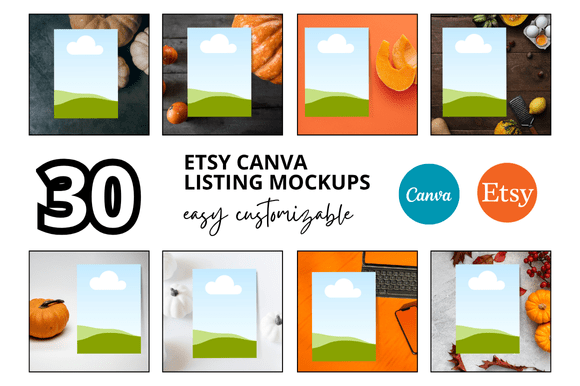
Etsy is heavily visual. Listings with mockup images tend to rank better in search because they generate higher engagement. A digital product like a printable wall art set benefits greatly from being shown framed on a wall, or leaning against a shelf. Without that context, buyers struggle to imagine how it fits into their own space. A mockup provides that context instantly. Many Etsy sellers use 30 KDP Etsy Listings Mockup sets to create multiple listing variations for the same product, testing which scene resonates best with their audience.
One observation I have made is that sellers who rotate their mockup images seasonally tend to see a bump in sales. Swapping a summer-themed desk scene for a cozy winter setup keeps listings feeling fresh. Since these mockups are layered templates, changing the background is often as simple as hiding or showing different elements.
How Different Users Draw Different Benefits
Not everyone uses a mockup pack the same way. A beginner who just published their first KDP book might use one mockup per listing and call it good. A seasoned seller with hundreds of products might use the same thirty mockups to create a complete visual rebrand, replacing old images across their entire catalog. That scalability is one of the strongest points.
Some users focus on the time savings. If you value your time at a certain hourly rate, paying for a mockup pack and spending an afternoon generating images is far cheaper than outsourcing to a freelancer. Others value the creative control. You decide which scenes match your brand, what props appear, and whether the lighting feels warm or cool. The flexibility is especially useful if you sell across different niches and need images that align with each audience.
There is also the aspect of testing. A seller can create two different listing images for the same product using different mockup scenes and run a simple A/B test by alternating them. Over time, you learn which visual style drives more clicks. That data becomes valuable for future product launches.
Practical Examples from Real Listings
Let me give you a concrete scenario. Imagine you are selling a 12-month undated planner on KDP. You have a plain spine cover with a simple design. If you just upload the flat cover image, it looks boring. But if you use a mockup that shows the planner lying open on a desk with a pen resting on the page, the listing instantly communicates both the size and the intended use. A buyer can see that it is a ring-bound or perfect-bound book. They can gauge the page thickness. They start picturing themselves using it.
Another example: an Etsy shop selling a set of printable habit trackers. Instead of showing a flat digital file, the seller uses a mockup where the tracker is clipped to a clipboard with a coffee stain in the background. That little bit of staging makes the listing feel personal and relatable. It tells a story without words.
For authors selling children's books on KDP, mockups that show the book held by a child or placed on a bed add emotional appeal. Parents buying bedtime stories respond to that. The same mockup set can be adapted by switching out the cover image for different titles in the series, creating a consistent brand look across all listings.
Things to Think About Before Choosing a Mockup Pack
Not every pack of thirty mockups is created equal. Some things matter more than others depending on your workflow. File format is one. If you use Photoshop, layered PSD files are ideal. If you prefer software like Canva or Affinity, look for packs that include compatible formats or flat image placeholders. Resolution also matters, especially if you plan to use the images for Amazon's high-resolution requirements. Blurry mockups will hurt your listing more than a plain white background.
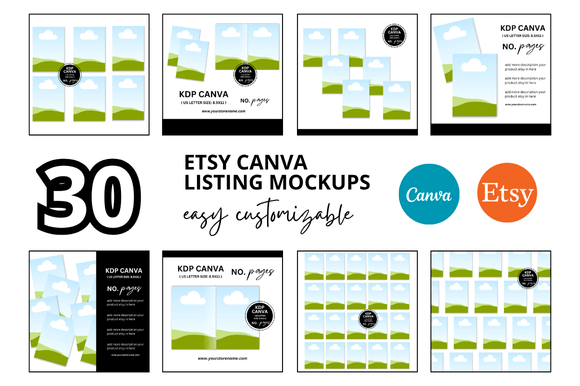
Scene variety is another consideration. A pack with thirty scenes that all look the same does not give you much flexibility. Look for diversity in angles, backgrounds, and included props. You want some flat lays, some handheld shots, some shelf displays, and maybe a digital screen mockup for ebooks. The more variety, the more useful the pack becomes across different product types.
Customization ease matters too. The best mockups use smart objects or simple layer structures. If you have to manually resize or reposition your design each time, the time savings shrink. Check the product description for details about how the editing process works. Many sellers overlook this and end up frustrated.
Potential Limitations to Keep in Mind
While a 30 KDP Etsy Listings Mockup is a powerful tool, it is not a magic bullet. The scenes are generic by nature. They are designed to fit a wide range of products, which means they lack brand-specific details. If your shop has a very distinct aesthetic, you might find that certain mockups clash with your vibe. Some sellers solve this by editing the background colors or swapping out props within the template, but not everyone feels comfortable doing that.
Another limitation is that mockups look obviously like mockups to a trained eye. A buyer who has seen the same coffee cup and twine in twenty different Etsy listings might start associating your brand with stock imagery. That is not necessarily a dealbreaker, but it is worth being aware of. The goal is to balance convenience with authenticity. Using mockups as a base and adding a unique touch, like your own logo or a custom color filter, can help differentiate your images.
Some users also find that certain mockup packs do not include scenes suitable for non-book products. If you sell digital courses, templates, or physical crafts, make sure the pack you choose actually matches what you are listing. Reading reviews and looking at the included scenes before purchasing saves frustration.
Making the Most of a Mockup Set
If you decide to use a 30 KDP Etsy Listings Mockup, consider batching your work. Set aside a few hours to generate images for multiple products at once. Store the output files in a folder organized by product or scene. That way, when you launch something new, you already have a library of backgrounds to pull from.
Another tip is to use the same mockup style across your entire store. Visual consistency builds recognition. A shopper who lands on your shop and sees a cohesive look is more likely to trust your brand. Even if the product categories are different, repeating certain visual cues like warm lighting or a specific desk setup creates a sense of familiarity.
Some sellers repurpose their mockup images beyond listings. They use them for social media posts, Pinterest pins, and advertising creatives. A single mockup image can serve multiple marketing channels, which extends its value well beyond the initial listing creation.
You can also mix mockup types. Using a flat lay for your main image and a lifestyle scene for the secondary images gives customers a fuller picture without being repetitive. The variety keeps them scrolling instead of clicking away.
The Bottom Line on Practical Value
What makes a 30 KDP Etsy Listings Mockup genuinely useful is not the number thirty. It is the fact that it removes a barrier between having a finished product and presenting it well. Many sellers spend weeks perfecting their interior design or cover artwork, then upload a flat image that undersells everything they just created. Mockups fix that disconnect. They let your product look like it belongs in a real environment, which is exactly what buyers want to see before they hand over their money.
For someone starting out, the learning curve is minimal. Open the file, place your artwork, export. For someone scaling up, the efficiency gain is significant. Thirty scenes give you enough variety to keep your listings fresh without requiring you to constantly create new visual assets from scratch. That is a practical middle ground between hiring a professional photographer and doing nothing at all.
If you sell products that need to be held, opened, or used in a specific context, mockups fill that gap. They help buyers understand not just what they are buying, but what it will feel like to own it. That shift in perception often makes the difference between a listing that sits and one that sells.