20 Journal Etsy Listings Mockup: A Practical Guide for Sellers
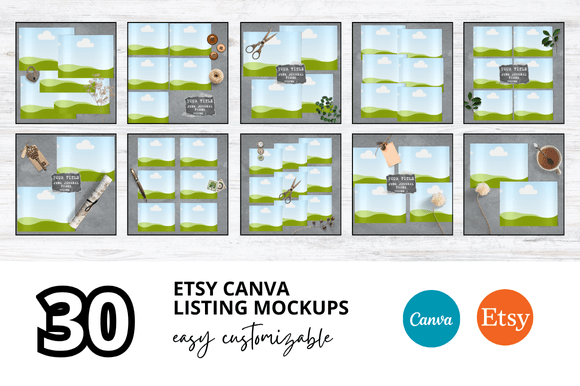
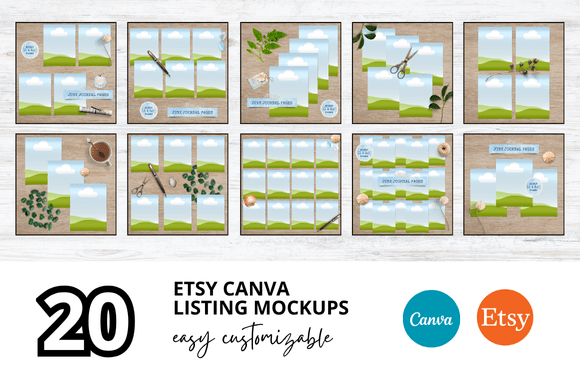
If you sell journals, planners, or notebooks on Etsy, you already know the listing image can make or break a sale. A strong visual communicates quality, sets expectations, and helps your product stand out in a crowded search feed. That is precisely where a well-designed 20 Journal Etsy Listings Mockup becomes an asset worth understanding. This resource is not just another template pack. It is a structured set of display scenes that lets you show your journal designs across twenty distinct listing slots without reshooting or redesigning each one from scratch. When used thoughtfully, it saves hours of production time and gives your shop a cohesive, professional feel.
For creators, marketers, and small business owners who juggle multiple product lines, efficiency matters. A mockup set of this scale allows you to maintain brand consistency while presenting variety. Instead of creating a bespoke background for every journal cover, you drop your artwork into prebuilt scenes that already consider lighting, composition, and context. The result is a shop that looks polished and intentional.
What Makes These Mockups Different From Standard Templates
A typical Etsy mockup might include three to five scenes. Expanding that to twenty changes how you approach your store. With that many variations, you can show different angles, environments, and usage scenarios for each journal. Some scenes might feature the journal on a desk with a cup of coffee, suggesting morning reflection. Others could place it in a tote bag or on a bookshelf, hinting at life integration rather than a static product shot.
The strength of a 20 Journal Etsy Listings Mockup lies in its flexibility. You are not locked into one aesthetic. You can mix flat lays, hand-held shots, and open-page spreads without needing a photographer or a studio. For sellers who release multiple journal designs each season, this variety helps each listing feel distinct while still belonging to the same brand family.
Another notable quality is the file structure. Most comprehensive mockup packs come with organized layers, smart objects, and pre-sized canvases that align with Etsy’s image requirements. This reduces the technical friction that often slows down listing creation. Instead of resizing and adjusting resolution manually, you open a file, insert your design, and export. The workflow becomes repeatable, which is exactly what you need when you are managing twenty or more live listings.
Practical Applications Across Different Selling Contexts
The usefulness of a twenty-scene mockup set extends beyond just the solo seller working from home. Consider a small publishing house that produces guided journals for different niches—gratitude, travel, goal setting, mindfulness. Each niche requires its own visual language. With a large mockup collection, the publisher can assign specific scenes to specific product lines. Travel journals might use outdoor or map-themed backgrounds, while gratitude journals stay in warm indoor settings. This targeted use of mockups helps customers immediately sense the purpose of the journal before reading the description.
Freelancers and design studios also benefit. When pitching a journal concept to a client, you need to show how the final product will look in real life. A mockup set gives you that capability without manufacturing a prototype. You can present multiple cover variations in different settings during a single meeting, making your proposal more compelling.
Educators and workshop facilitators have another angle. If you create journals as teaching tools or course supplements, you want them to appear professional and credible. A mockup showing the journal on a classroom table or next to a notebook conveys utility and seriousness. The same logic applies to bloggers and content creators who sell journals as part of their brand. A cohesive shop aesthetic reinforces trust, which is especially important when your audience already follows you for your voice and expertise.
Branding and Storytelling Through Scene Selection
One underappreciated advantage of a twenty-scene mockup pack is the ability to tell a story across your entire shop. When a customer scrolls through your listings, they should pick up a consistent vibe. The scenes you choose—bright and airy, moody and textured, minimalist or botanical—set that tone. If you sell bullet journals for creative professionals, scenes with clean lines, neutral colors, and office accessories reinforce that target audience. If your journals target wellness seekers, soft lighting, natural materials, and calming colors send the right message.
Using the full set of twenty mockups, you can also create variety without confusion. For example, you might use one scene for the main listing image, a second for the second photo, and a third for the mockup showing the interior. This layered approach gives potential buyers a fuller understanding of the product without overwhelming them with inconsistent visuals.
Efficiency Gains and Time Management
Anyone who has built an Etsy shop from scratch knows how time-consuming listing creation can be. Between writing descriptions, researching tags, and handling photography, the process eats into time that could be spent designing or marketing. A 20 Journal Etsy Listings Mockup directly addresses this by compressing the visual production phase. Once you have your journal cover designed, you can produce all twenty listing images in a single editing session. That means you could launch a whole new product line in a day rather than over a week.
This efficiency is not just about speed. It also improves quality. Rushed photography often results in inconsistent lighting or sloppy composition. Mockups eliminate those variables. You get the same high-quality lighting and perspective across every listing, which makes your shop look more established. For new sellers, this can be the difference between blending in and getting that first click.
What to Look for When Selecting a Mockup Set
Not all twenty-scene mockup packs are created equal. Before purchasing or downloading one, consider the realism of the textures. A mockup that looks obviously digital can hurt your credibility. Look for sets that include subtle shadows, paper grain, and natural lighting. These details make the final image feel like a photograph rather than a render.
File compatibility matters too. Ensure the mockups are available in a format that works with your editing software. Photoshop PSD files with smart objects are standard, but some packs also offer versions for Procreate, Canva, or Affinity. If you do not have advanced editing skills, a Canva-compatible set might be more practical. Check that the resolutions are high enough for Etsy’s image guidelines, which recommend at least 2000 pixels on the longest side.
Another consideration is the diversity of scenes. A good set should include both portrait and landscape orientations, close-ups and contextual shots, and variations in props. If all twenty scenes look nearly identical, you lose the benefit of variety. Skim through the preview images to confirm that you can use different scenes for different listing positions without repetition.
Common Pitfalls and How to Avoid Them
One mistake sellers make is using the exact same mockup for every listing. Even if you have twenty scenes, repeating the same two or three across multiple products makes your shop feel repetitive. Rotate through the full set so each journal design gets a unique treatment. This also helps you test which scenes perform best. Over time, you may notice that certain perspectives generate more clicks, allowing you to refine your approach.
Another pitfall is ignoring brand fit. A mockup scene that works well for a vintage-style journal might look mismatched with a modern, minimalist cover. Do not force a scene just because it is in the pack. Select scenes that complement the journal’s personality. If a scene does not match, leave it unused. Having twenty options does not mean you must use all of them for every product.
Lastly, avoid over-editing. The mockup already provides lighting and atmosphere. Adding heavy filters, excessive brightness adjustments, or text overlays can clash with the scene and distract from the journal itself. Let the product be the focus. Use the mockup as a frame, not as the main attraction.
Practical Recommendations for Implementation
Start by organizing your mockup files in a way that matches your product lineup. Create folders for each journal design and within each folder, place the scenes you plan to use. This saves time when you are preparing listings in bulk. If you use a tool like Canva, set up a template with your brand colors and fonts already applied so each listing image stays consistent beyond the mockup itself.
Consider A/B testing your main listing images. If you have the bandwidth, try different scenes for the same journal and monitor which one gets more views or saves. Etsy’s listing analytics can show you how each image performs. Over a few weeks, you will gather real data on what your audience responds to.
For sellers who offer customizable journals, mockups become even more valuable. You can show base designs in the listing photos and then use a separate mockup to demonstrate personalization options, such as embossed names or cover color choices. This gives buyers a clear picture of what they are getting, which reduces returns and increases satisfaction.
Why This Approach Works for Modern Shops
The landscape of Etsy selling has changed. Customers expect high-quality visuals, and they make snap judgments based on listing images. A 20 Journal Etsy Listings Mockup gives you the tools to meet that expectation without hiring a professional photographer or investing in expensive equipment. It democratizes good design, making it accessible to independent creators and small teams.
From a branding perspective, consistency across your listings builds recognition. When a customer sees your journal in their search results alongside other products, a cohesive visual identity helps them remember you. They may not know why your shop feels more put together, but they notice the difference. That perception translates into trust, which is essential for converting browsers into buyers.
Moreover, mockups allow you to focus on what you do best: designing journals. Instead of splitting your energy between design and photography, you streamline the production pipeline. This means more time for developing new cover art, refining your interior layouts, or engaging with your customers. The mockup becomes a tool that amplifies your creative output rather than competing with it.
Final Observations on Getting the Most Out of Your Mockups
If you are new to using mockups, start small. Choose five to eight scenes from the pack that best represent your current product line. Master the editing workflow with those before expanding to the full set. This prevents overwhelm and lets you build confidence in the process.
Pay attention to the details that make your journal unique. If your journal has a textured cover, a ribbon bookmark, or rounded corners, make sure the mockup scenes you choose highlight those features. Close-up shots work well for texture, while open-angle shots can show thickness and binding quality. Use the variety in your mockup pack to showcase different selling points.
Finally, treat your mockups as part of your brand assets. Just like your logo or color palette, they contribute to how customers perceive your shop. Update them periodically if your brand evolves. A mockup set that felt right two years ago may no longer align with your current aesthetic. Investing in fresh scenes can revitalize your shop and attract new attention.
A twenty-scene mockup set is not a shortcut to success—it is a practical resource that, when used strategically, helps you present your journals in the best possible light. Whether you are launching a first listing or expanding an established shop, the right mockups reduce friction, improve consistency, and let your actual product designs take center stage. That is a worthwhile investment for any seller serious about growing their Etsy presence.