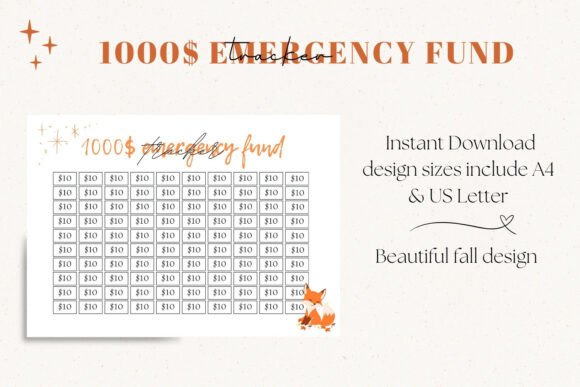
1000Fall Emergency Fund Tracker: Your Guide to Building a $1,000 Safety Net This Season
What Is the 1000Fall Emergency Fund Tracker?
The 1000Fall Emergency Fund Tracker is a practical tool designed to help you build a starter emergency fund of $1,000 during the autumn months. While the concept of an emergency fund is well known, actually starting and sticking to a goal can feel overwhelming. This tracker breaks the process into manageable, seasonal steps—using the fall season as a natural momentum builder. Whether you prefer a printable sheet, a digital spreadsheet, or a dedicated app, the 1000Fall Emergency Fund Tracker gives you a clear path from zero to $1,000 by focusing on consistent action rather than perfection.
Many financial experts recommend a $1,000 emergency fund as an initial cushion for unexpected expenses like a car repair, a medical co-pay, or a temporary drop in income. The 1000Fall Emergency Fund Tracker takes that benchmark and pairs it with the unique rhythms of fall: back-to-school transitions, pre-holiday spending pressures, and the natural urge to get organized before winter. By aligning your saving effort with the season, you tap into a time when many people already feel motivated to review their finances and make positive changes.
Why a $1,000 Emergency Fund Matters—and the Challenges You Might Face
Building any emergency fund is a major step toward financial stability, but a modest $1,000 fund is especially powerful. It’s large enough to cover many common emergencies yet small enough to be achievable in a few months. However, the road to that first $1,000 is rarely smooth. Common challenges include irregular income, competing priorities like holiday gifts or winter preparations, and simple lack of motivation when progress feels slow.
You might also struggle with knowing exactly how much to save each week or where to find the extra cash. Perhaps you’ve tried saving before but gave up after a setback. The 1000Fall Emergency Fund Tracker directly addresses these hurdles by providing structure and visibility. It turns an abstract goal into a concrete number that you can track, celebrate, and adjust as needed.
How the 1000Fall Emergency Fund Tracker Helps You Overcome These Hurdles
The biggest advantage of the 1000Fall Emergency Fund Tracker is its focus on this season. Instead of a generic “save $1,000” goal, it maps out fall-specific milestones—for example, saving $50 per week for 20 weeks, or $125 every two weeks for 8 weeks. This creates a timeline that feels urgent but doable. The tracker itself might include a visual progress bar or a simple column where you log each deposit, turning your effort into a visible achievement.
It also helps you anticipate seasonal expenses. Fall often brings higher utility bills, back-to-school costs, and the temptation of early holiday shopping. The 1000Fall Emergency Fund Tracker encourages you to set aside a small amount before those expenses hit, rather than scrambling afterward. By front-loading your savings in early fall, you build a buffer that can absorb those seasonal spikes without derailing your fund.
Many versions of the tracker include prompts for identifying “found money” — like reducing dining out, selling unused items, or using a cash-back app. These small wins add up quickly when you have a dedicated place to track them. The psychological boost of checking off a completed week or month keeps you engaged even when life gets busy.
Practical Applications and Real-Life Outcomes
Imagine you’re a freelancer with variable monthly income. Using the 1000Fall Emergency Fund Tracker, you decide to save 10% of every paycheck during September, October, and November. Even if some checks are small, the tracker helps you stay consistent. By December, you’ve reached $1,000 just in time for the holiday season. That fund means you can handle a last-minute travel expense or a broken appliance without reaching for a credit card.
For someone with a steady salary, the tracker can be linked to a separate savings account. You automate a transfer of $125 from each paycheck and mark it on the tracker. Seeing the balance grow week after week reinforces the habit. After three months, you have your $1,000 fund—and the confidence to start working on a larger emergency fund of three to six months of expenses.
The outcomes go beyond the dollar amount. Users of the 1000Fall Emergency Fund Tracker often report feeling less anxious about money, more in control of their spending, and more motivated to tackle other financial goals. The act of tracking itself builds awareness. You start noticing where your money goes and where you can cut back, which makes the entire process self-reinforcing.
Recommendations for Maximizing Your Success
To get the most out of the 1000Fall Emergency Fund Tracker, pair it with a simple budgeting strategy. Use the first week of fall to audit your expenses and identify at least $50–$100 you can redirect toward savings. Common places to look include subscription services (pause the ones you rarely use), takeout meals, and impulse online shopping. Write those savings directly into your tracker as projected deposits.
Another effective tactic is to set a “fall savings challenge” with a friend or family member. Share your progress on the 1000Fall Emergency Fund Tracker once a week. Accountability dramatically increases follow-through, and you can celebrate together when you both hit $1,000. If you prefer privacy, simply sharing your goal with one trusted person can still help.
Consider using a visual representation of your tracker—a paper chart on your refrigerator, or a digital widget on your phone. The more you see it, the more top-of-mind your goal becomes. Some people like to color in a pumpkin or leaf for every $100 saved, adding a seasonal touch. The key is to make the tracker work for your personality and lifestyle.
How Different Users May Approach the Tracker
Not everyone starts from the same place. A student with part-time work might rely on the 1000Fall Emergency Fund Tracker to save small amounts from each shift. They might set a goal of $25 per week over 40 weeks, stretching beyond fall. That’s fine—the tracker adapts to your timeline. For a parent balancing household expenses, the tracker can be used to save money from a side gig or tax refund, with a target completion by the end of November.
Some users prefer a more aggressive approach. If you can save $250 every two weeks, you could finish the fund in just two months. The 1000Fall Emergency Fund Tracker still works—just modify the intervals. Others need a gentler start: save $10 per day for 100 days. The tracker is not rigid; it’s a framework you customize.
The important thing is that the tracker exists as a constant reminder and record. Whether you check off boxes on a printable sheet or update a digital column, the act of recording each deposit reinforces your commitment. Over time, tracking becomes a habit that extends beyond emergency savings to other financial goals.
Key Considerations Before You Begin
Before diving into the 1000Fall Emergency Fund Tracker, evaluate your current financial situation. If you have high-interest debt, consider using the debt snowball or debt avalanche method alongside your savings. Some experts recommend paying off credit cards before building an emergency fund, but others advocate for a small fund first to avoid creating more debt when emergencies strike. The tracker can coexist with a debt repayment plan—just allocate a smaller portion to savings initially.
Also, think about where you’ll hold the funds. A high-yield savings account separate from your checking account is ideal. It earns a little interest and reduces the temptation to dip into the money. The 1000Fall Emergency Fund Tracker works well when paired with automatic transfers into that account. You schedule the transfers on payday, then log them in the tracker.
Finally, remember that the tracker is a tool, not a magic solution. It requires commitment. But by breaking a $1,000 goal into weekly or biweekly chunks tied to the fall season, you remove the paralysis that often stops people from starting. The first step is to get the tracker—whether you download a template or create your own—and make your first entry today.
Outcomes That Go Beyond the First $1,000
Once you complete the 1000Fall Emergency Fund Tracker, you’ll have more than a safety net. You’ll have the confidence that you can set a financial goal and achieve it. Many people find that after reaching $1,000, they naturally want to continue saving. The same tracker can be repurposed for the next goal: perhaps a $2,000 fund by spring, or a specific savings target like a vacation or car down payment.
The season-specific design also encourages you to use the fall momentum in other areas. You might start a spending fast for one month, or challenge yourself to cook at home more often. The tracker becomes a springboard for better money habits overall. And if you ever need to use the fund—because that’s what it’s for—you can restart the tracker without shame. It’s a cycle, not a one-time event.
Ultimately, the 1000Fall Emergency Fund Tracker is about taking control of your finances in a way that fits your life. It acknowledges that fall can be a busy, expensive season, but also a time of fresh starts and intentional planning. By using the tracker, you turn the season’s challenges into motivation. You stop hoping for financial security and start building it, one tracked deposit at a time.
Whether you’ve never saved before or you’re rebuilding after a setback, the 1000Fall Emergency Fund Tracker offers a clear, realistic path. Download or create your version today, set your first deposit, and watch your progress grow. Your $1,000 safety net is closer than you think.